
32.5Km, 11H00 CUT OFF
The prior day had been a rude awakening. On a personal level, nothing I can readily think of rivals the experience. Good. And bad. Several things made it particularly special.
First, I’m still here. Ready to go again, just about. Chewed up? Yes. Pride slightly dented? Perhaps. But I’m back for more – and I’m proud of that. Second, the people who lived the experience with me. My Sand Brothers. Very, very special.
Statistics from Stage One make for consequential reading:
- 13 withdrawals, 1 missed cut-off at 1CP1 (Stage One, checkpoint one) amongst them, Kev who we later hear was flown by helicopter to Doc Trotters and yet to come out of the medical tent
- 12 withdrawals, 2 missed cut-offs, 1 stopped by organisation at 1CP2, including our second tent mate, Aaron.
- 8 withdrawals after arrival at B1 (bivouac 1).
The rules are unkind in that that if you withdraw or miss the cut-off during a stage, you cannot return to your tent. Your food is removed (so you don’t give it to your tent mates) and you sleep elsewhere.
It is worth restating that Stage One is the SHORTEST at 32.2k. A total of 37 people had not made the start line for Stage Two. The statistics later today would make for even more sobering analysis.
The impacts of unprecedented heat were not dismissed or ignored by the organisers. Striking the right balance is not easy. Marathon des Sables is billed as ‘The Toughest Footrace on Earth’ – an extreme event in the Sahara desert, largely self-sufficient, requiring physical and mental endurance and self-management to survive and reach the finish. Weather is clearly a variable that you have to manage. It is the Sahara after all. This was not the first time temperatures had been extreme during the MDS, however on this occasion the heat was proving to be both extreme and sustained.
The number of runners who had already succumbed to the conditions and withdrawn was high. The risks of hyperthermia were very real. After my experience of Stage One, I feel qualified to say that.
For Stage Two, the organisation bring the start time forward thirty minutes to 8.00am instead of 8.30am. One extra bottle of water would also be provided at both CP1 and CP2.
There are those who feel the organisers could and should have gone further. That is a debate for another time. Post match analysis and lessons learned were not on my mind that morning.
Managing recovery is one of the things you can control. But only to an extent. It was becoming evident that the number of runners struggling with D&V was significant. Was this just the heat or is something else at play?

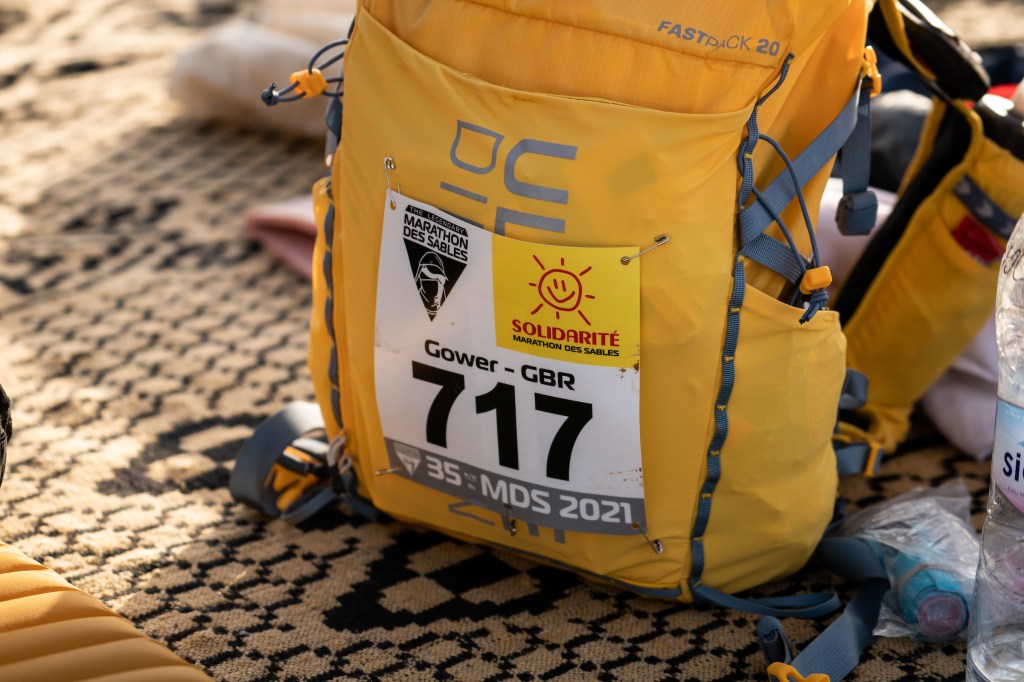
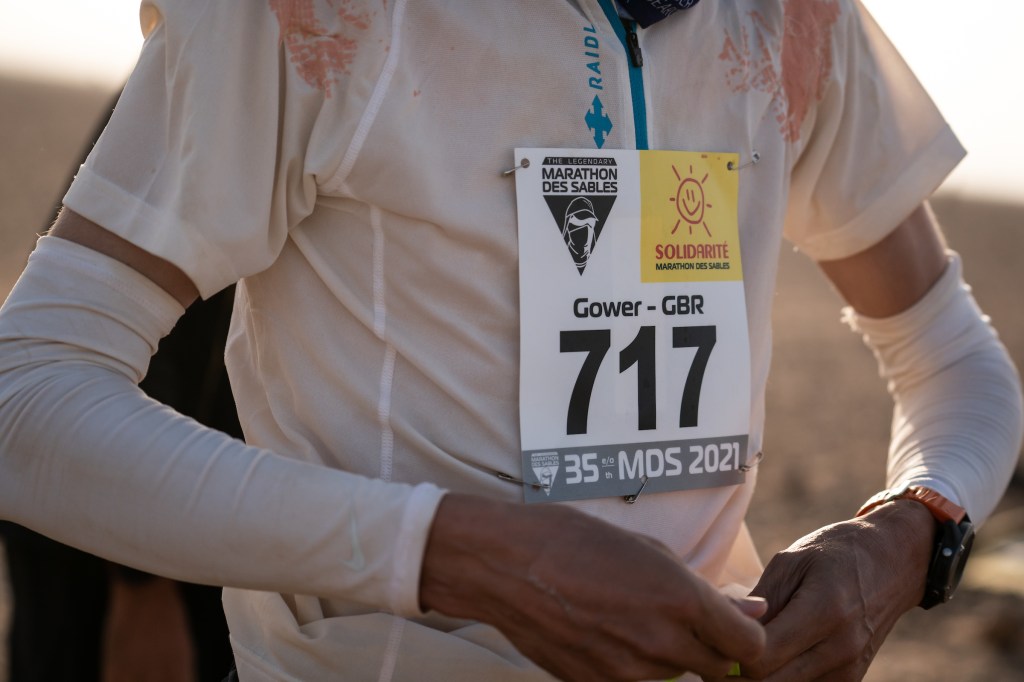
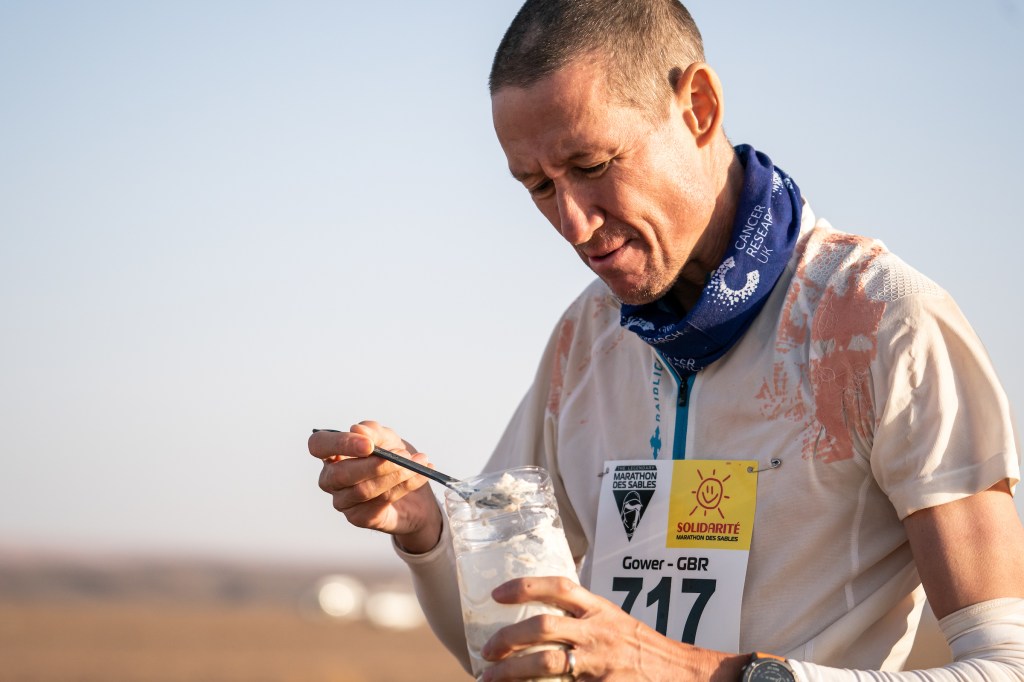
From the messages I’d received the previous evening, my family and several friends had clocked my 120 minute penalty for ‘vital medical assistance’. They knew I had finished Stage One but had no idea what condition I was in. This played on my mind and I didn’t want anyone to worry unnecessarily. I would make a point of waving to the finish live-cam at the end of Stage Two.
I needed to finish Stage Two first.
‘Dunes Day’ struck fear into the hearts of runners almost as much as the dreaded ‘Long Stage’. We had been spared mummy and daddy dunes during Stage One when our packs were heaviest, nevertheless the baby dunes were still relentless. Thankfully our packs were now a days food less heavy. Still heavy. But less heavy.

There is no surface I have ever run on, or environment I have run through, quite like sand dunes. Not the thickest London clay mud, not rivers, snow, rocks, shoulder high nettles, razor sharp gorse, tropical rainforests….. Nothing quite saps your energy like sand dunes. Endless mounds of relentless, incredibly fine, hot, mesmerising sand, stretching as far as the horizon in every direction. They taunt you with their beauty. Draw you in. Then gradually consume you. Grain by grain. Until your muscles burn with lactic acid, you feet swell, eyes sting, lips feel like sandpaper and mouth bone dry. This is not seaside sand, which is much coarser. Saharan sand gets into everything. [I am still washing it out two weeks later].
The clue is in the name. Marathon des Sables.
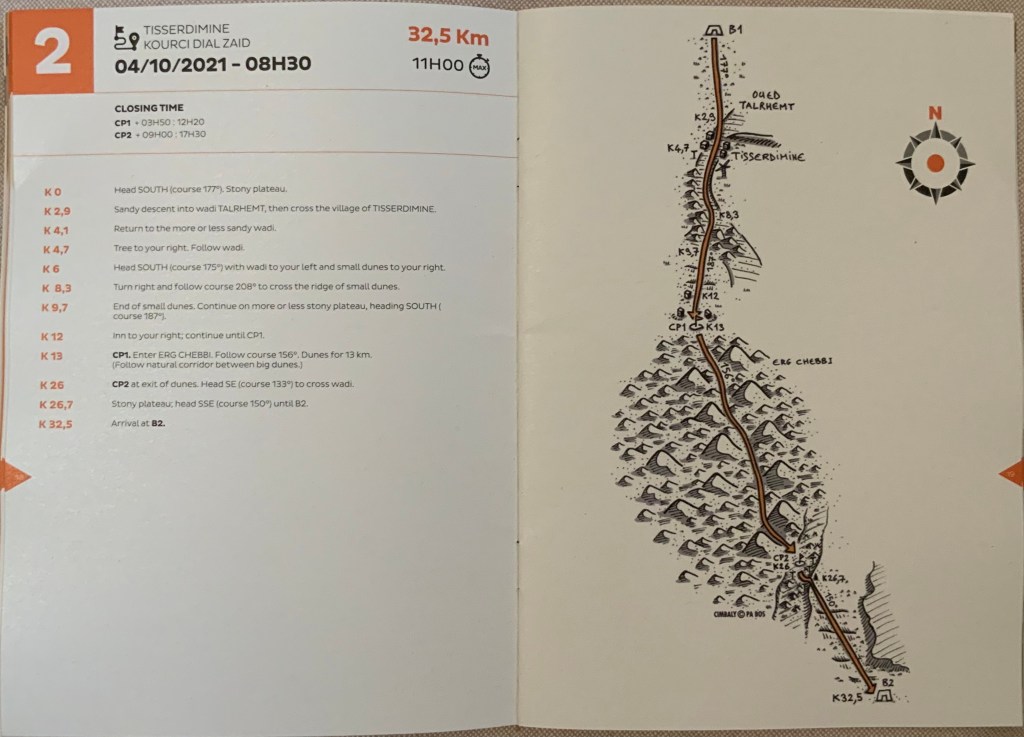
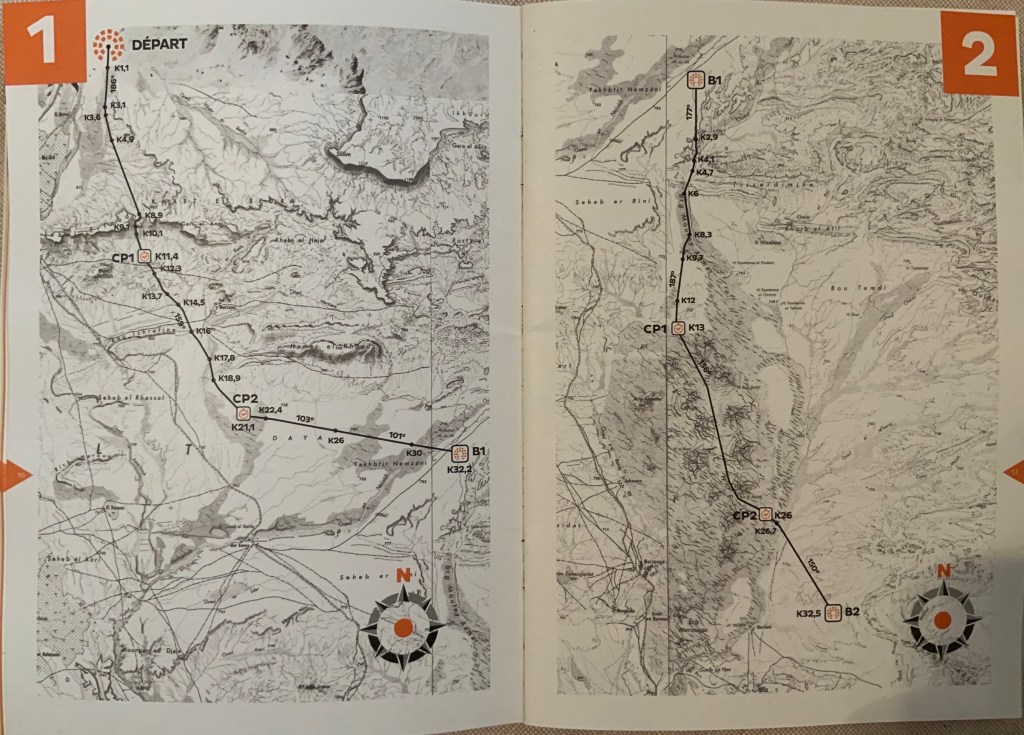
At 32.5k, Stage Two was only fractionally longer than yesterday’s stage. What hugely added to the anxiety was the thirteen kilometres of Erg Chebbi1 east of the tiny village of Merzouga2. Erg Chebbi are the highest dunes in Morocco, rising in places up to 150 meters from the surrounding hamada3 and spanning an area of approximately 200 square kilometres. The fastest runners would cover this wind-swept sand, without vegetative cover in under two hours. For everyone else, it would be a long, hard slog under a relentless sun with pounding heat.
Or worse.
The mood on the start line is more somber than the previous day as Patrick announces the shockingly high withdrawals. We spare a moment for our fellow participants. Announcements about the extra water are made. Patrick stresses the importance of salt tablets and encourages everyone to take extra water before entering the dunes. My legs feel heavy. No one has slept well and there has already been a lot of D&V. More is to come. Much more.
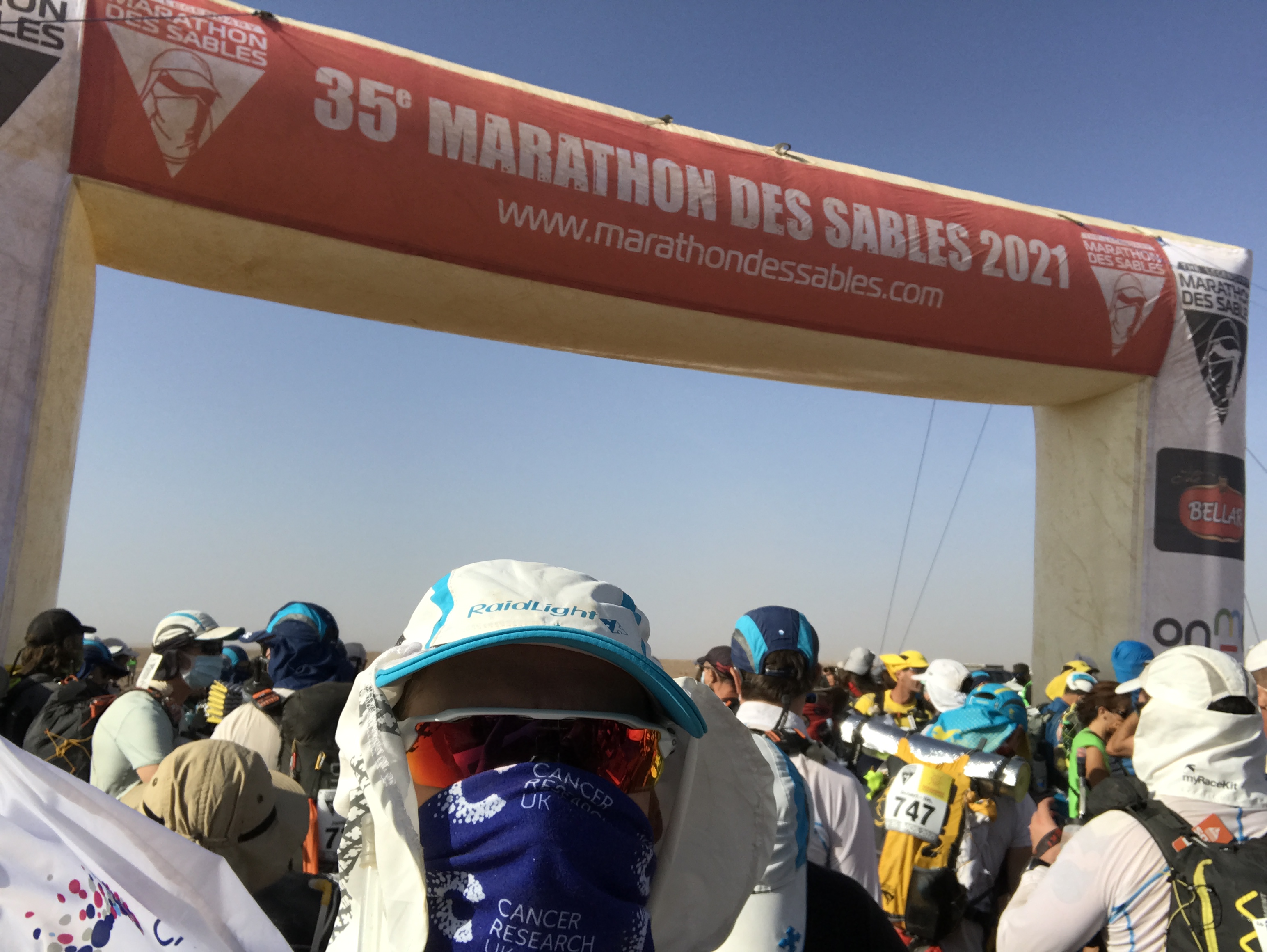
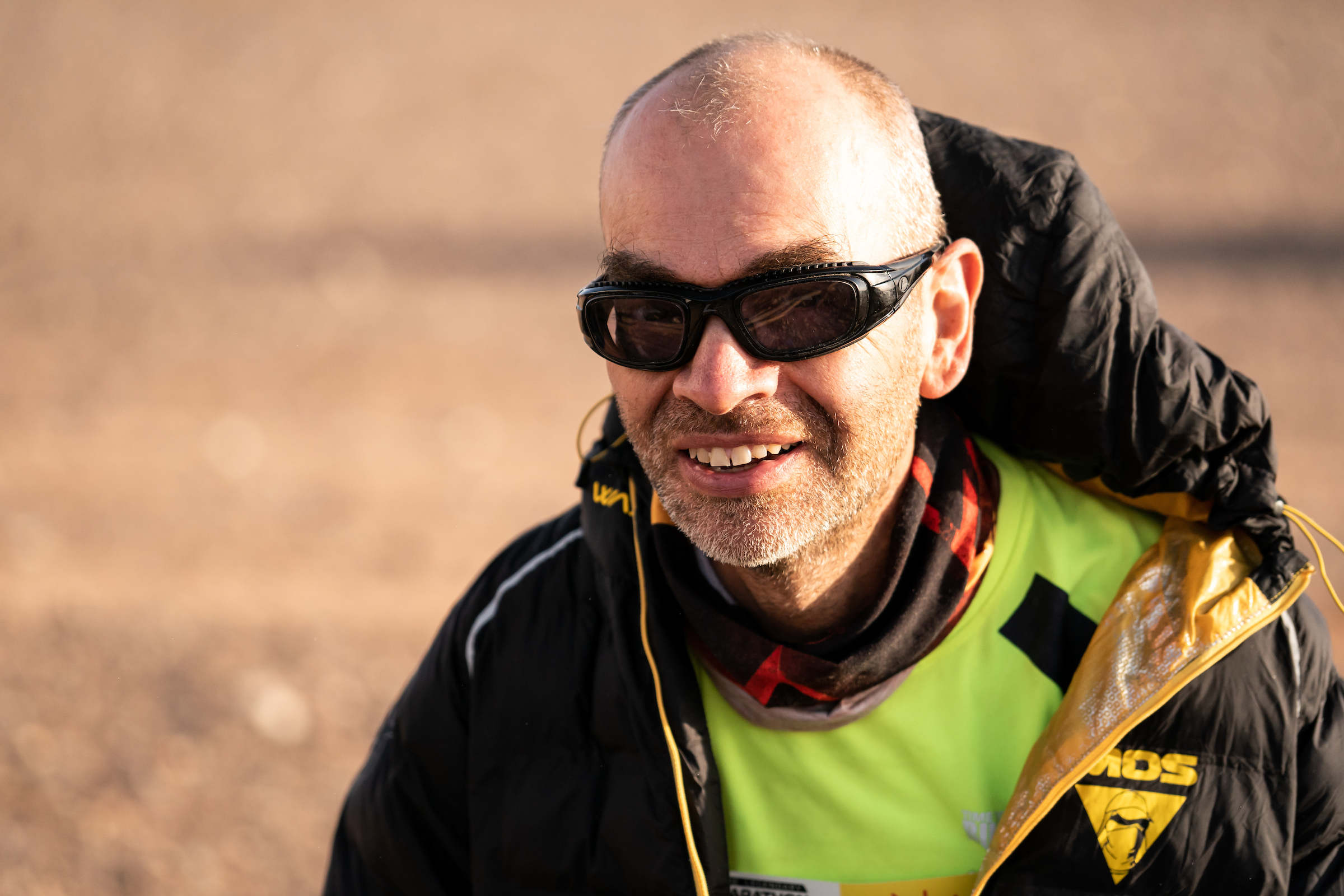
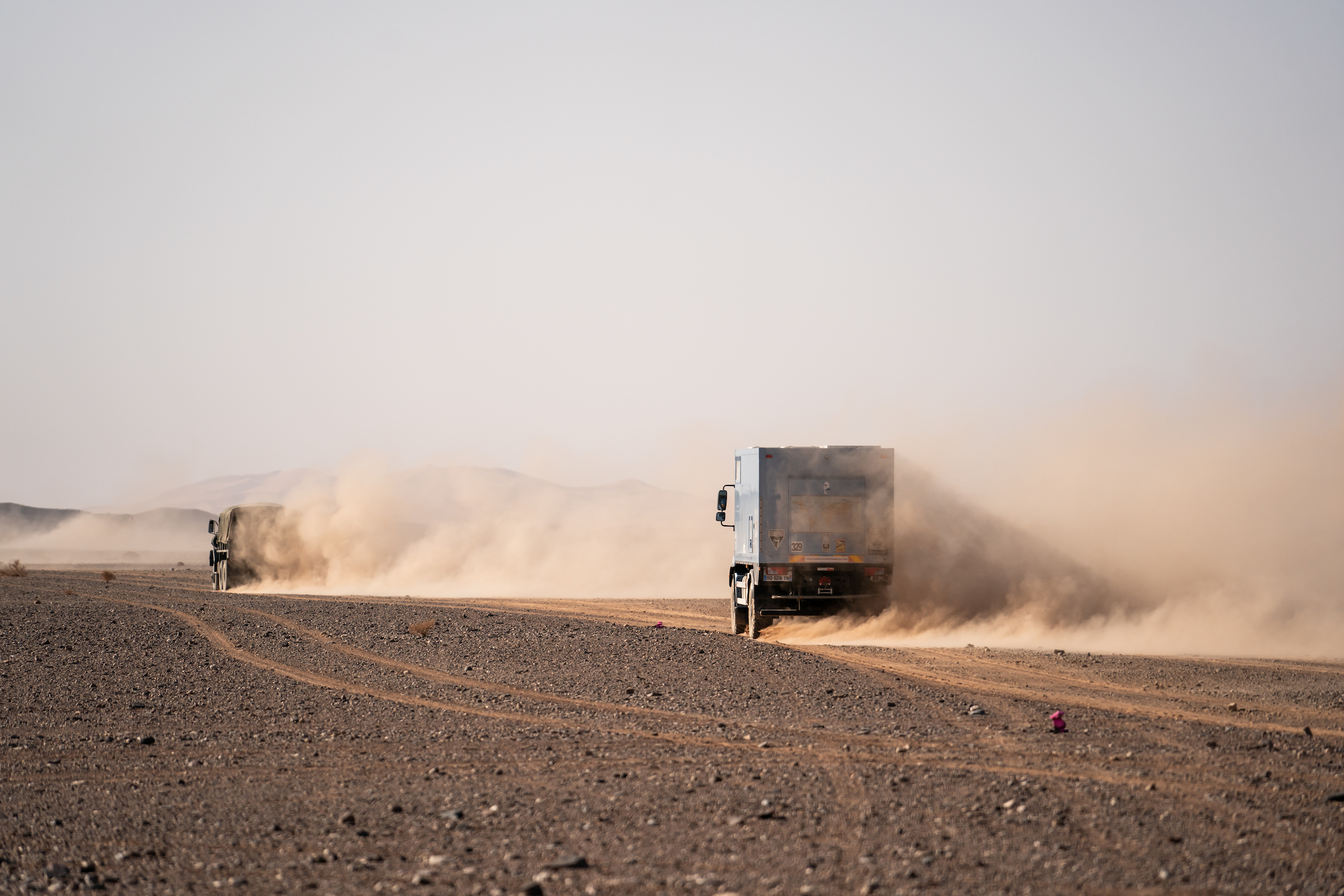

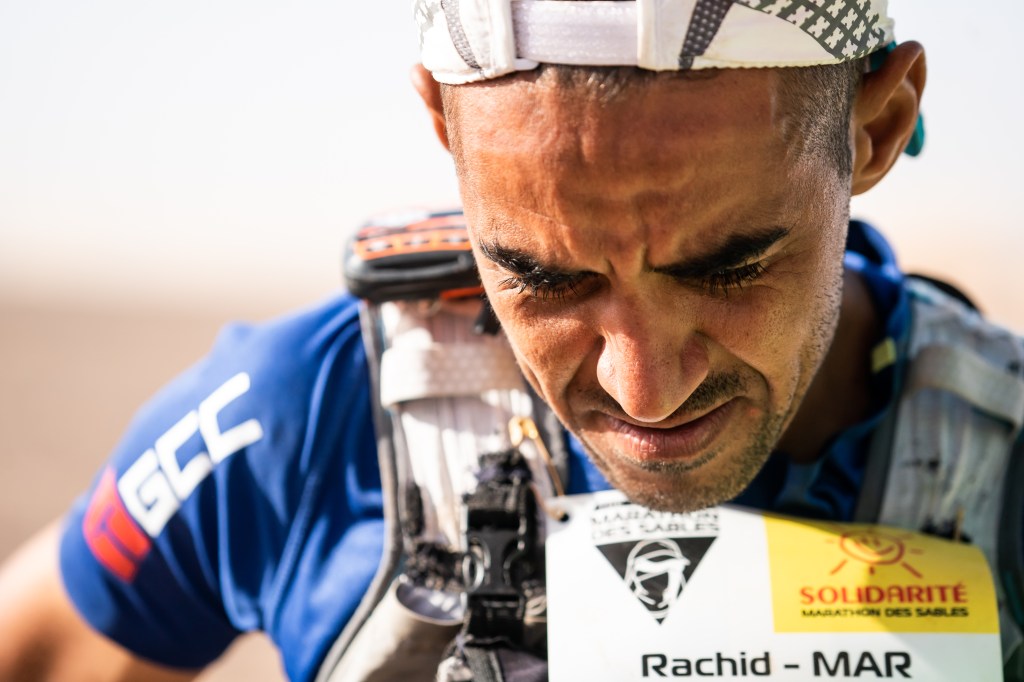
Anna Brown, a friend of Richard, Simon and Rob from Tent 60, is second in the ladies race after Stage One, just five minutes behind Aziza Raji who is shaping up to be the women’s favourite. This was a remarkable achievement in itself and it would be incredible to have a British runner in the top ten, never mind on the podium. Four Moroccans lead the men’s race with Rachid El Morabity comfortably ahead of his younger brother who is second. It is almost as if these elites glide over the sand. More on that tomorrow.
I completely revise my race strategy. Fanciful notions of a top hundred placing had vanished in the time taken for three litres of intravenous drip to trickle into my arm. My two hour time penalty will make even a top half placing a tall order. Survival is the goal. Anything more is a bonus. This is only Stage Two. Birthday announcements over, the now familiar roar of AC/DC begins. We check each other’s race packs. Final countdown.
I am not the only one who decides to turn their plan on its head. The majority of participants begin the stage walking. Walking fast and with purpose. But definitely walking. There is no shortage of desert for running later. If I’m still capable of running.

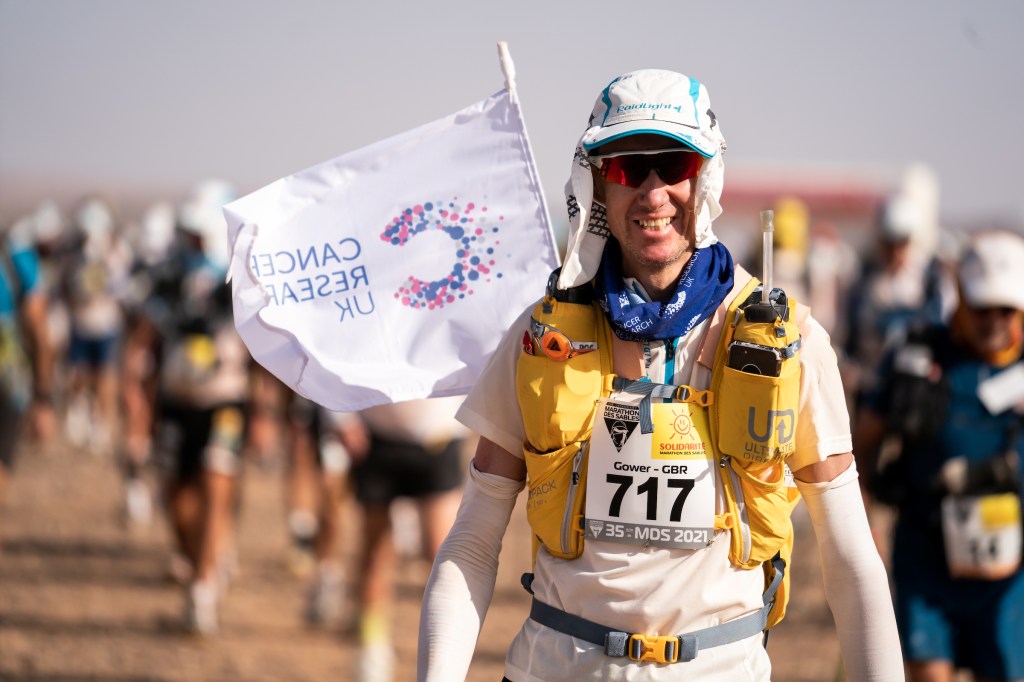
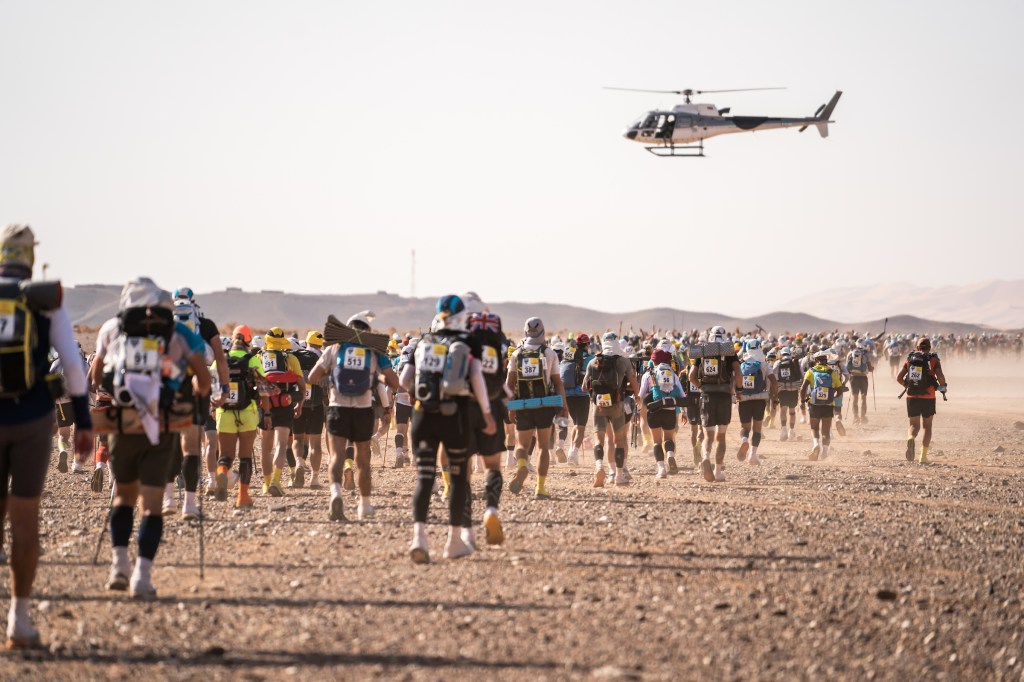
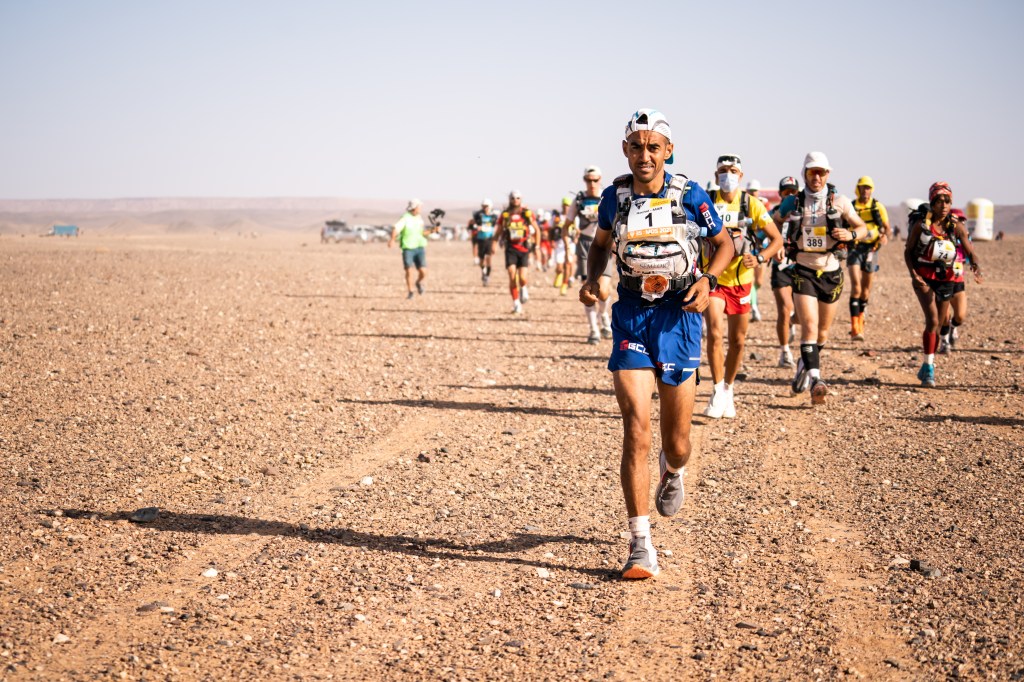
Yet I am bewildered at the number of people who go tearing off. Perhaps they just plan to run the first three kilometres across the stony plateau, before we reach the sandy wadis around the tiny village of Tisserdimine. I see many more Bedouin children, running alongside barefoot in the hope of a buff, phone charger or bottle of water. The small dunes leading up to CP1 were just the appetiser. I am glad I decided to walk most of this. Erg Chebbi is waiting patiently. Like an oven heating up before a sacrificial joint of meat is placed inside.
I am now carrying a full 1½ litre bottle of water, in addition to two 500ml soft flasks on my chest and a 600ml reserve flask in my pack side pocket. Over three litres to cover thirteen kilometres across, over, through Erg Chebbi – and the relative sanctuary of CP2.
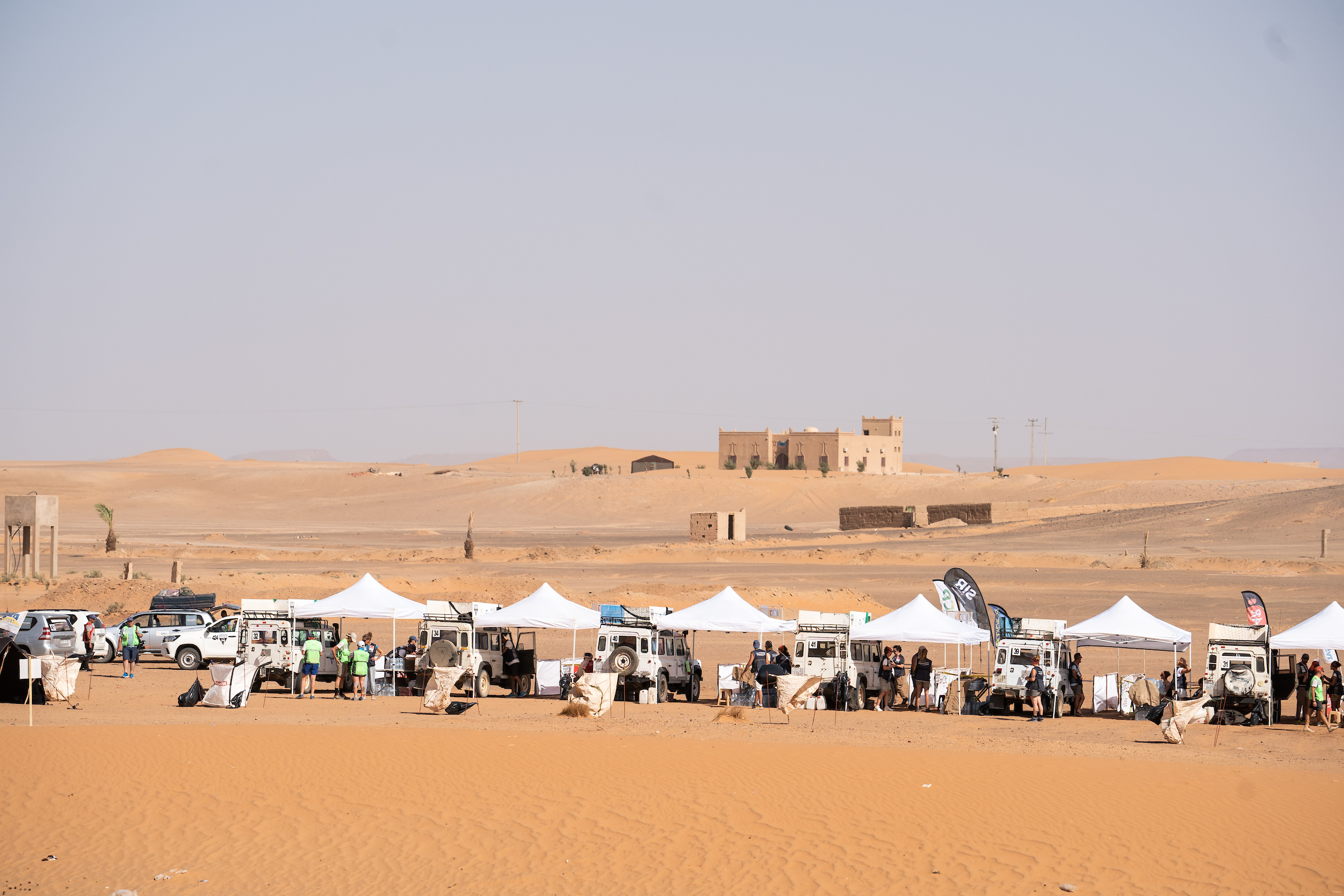
Once again the terrain and the heat are causing devastation with medical teams and helicopters in constant use. CP1 which was located before the dunes, looks like a medical tent from a war zone with IV drips hanging everywhere.


OMG. Wow. You – have – got – to – be – f****** kidding me.
I have just seen what is ahead of us.

The route follows a natural corridor between the big dunes on a compass bearing of 156 degrees. I had practiced following a compass bearing in training. During a previous edition of MDS, three British runners apparently decided to follow (what they thought was) a quicker route on dunes day. That year, dunes day was Stage One. They were found huddled round their remaining flask of water, severely hydrated, having hit their emergency SOS beacon.
There is a technique to running or walking the dunes. I had read a lot about this, listened to several podcasts and plundered Kev, Craig, Rob and Rich for every ounce of advice I could. My planned trip to Camber Sands for some dune practice had been abandoned due to the fuel crisis in the week leading up to our departure. As I rapidly assimilated to the terrain underfoot and started to perfect my own technique, I doubted that it would have been of much use anyway. Finding ‘crusts’ of unbroken sand is foremost and taking small detours to maintain your cadence is invariably advantageous. Pausing a few seconds to select your route from the vantage of the ridge of a big dune is time well invested and will unequivocally minimise the savagery of the sands.

It will also afford you the most breathtaking views imaginable. Very few people will ever experience this. Stay in the moment. Damn you iPhone. On strike again, demanding cooler working conditions. No matter. Images like this remain implanted in your memory forever.
It is easy to play ‘follow the leader’. Natural instinct. Feeling of safety in numbers. Easy option. Stepping directly into footsteps of the person preceding you before the sand washes over them. It is counter-intuitive to take a different route and needs a good deal of confidence. Or stupidity. However following someone else’s footsteps, into churned-up sand, often at the pace of the slowest person in a line, will slow you down. Even if the route is more direct, it will continually break your cadence. All you can do is shuffle your feet through deeper sand. Finding firmer, untouched crusts makes forward momentum significantly easier and is considerably less draining.
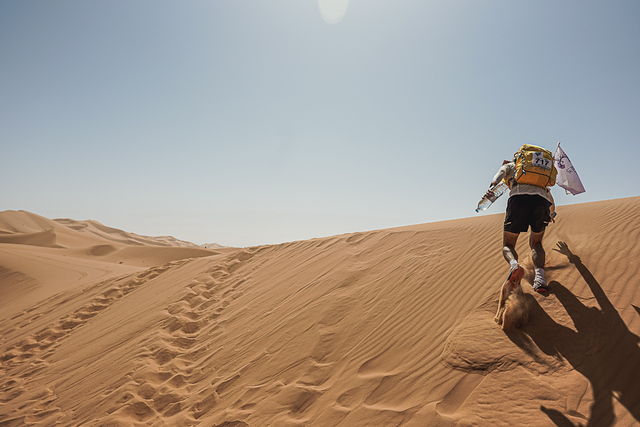
The big dunes obviously have significant elevation gains and drops. There is also a technique for climbing the dunes and descending them. At least, this is what was working for me. For ascending the majority of dunes, most participants are once again following directly into a trodden path made by the runners ahead of them. Often it is the ‘least steep’ route up to the ridge of a dune. In contrast, I am again plotting my ascent on a clean, untrodden crust – even if the gradient is marginally steeper. I find that bending forward double, with my race pack almost horizontal over my back, my head down low, feet pointing outwards like a duck, as flat as possible ensuring the maximum surface area remains in contact with the sand. In this way, I am able to scale the ascents rapidly, typically gaining four or five places with each dune.
I must pause here to give a small shout out. It is pretty obvious to anyone who knows me – or even someone I have a conversation with for more than two minutes – that I love running. It is perhaps less well known that I detest gym work, strength work, stretching, foam rolling (no one likes that) and all the other training that got me to this point. The one exception to this is Pilates. I joined one of Steve Dowse’s classes in September last year and that was one of the best decisions I have ever made. He has been an indispensable source of advice, encouragement and reassurance.
For those who know Steve, it will come as no surprise that I enjoy his classes. No. I would go further. I absolutely love them. Steve gives 110% in every class he leads. I have never come across a Fitness Instructor as enthusiastic or invested in his or her pupils. Monday 9:30am class is sacrosanct and sets me up for the week, especially after a typical Sunday long run. Shortly after I began the Monday class, I added Thursday. These sessions are now set in stone as part of my routine. Fellow classmates are an absolute hoot (in addition to being incredibly supportive and generous).
Glutes. Scaling the dunes you use a ton of glutes. By the time you summit the biggest ones, glutes are on fire. Burning. However without a year of Steve’s Pilates classes, said glutes would have been toast. Very burnt toast. Charcoal. Steve has become a great friend and mentor – I cannot recommend him highly enough. He is also a pretty handy runner, though not as good as his wife, Ruth!
Other than small sections across ridges with thick enough crusts, running these dunes is impossible. I still have no idea how the likes of the El Morabity brothers can run here. It is as if they are filled with helium. I am slight and weigh very little, but every time I try to run I break the crust and end up sinking into the sand.
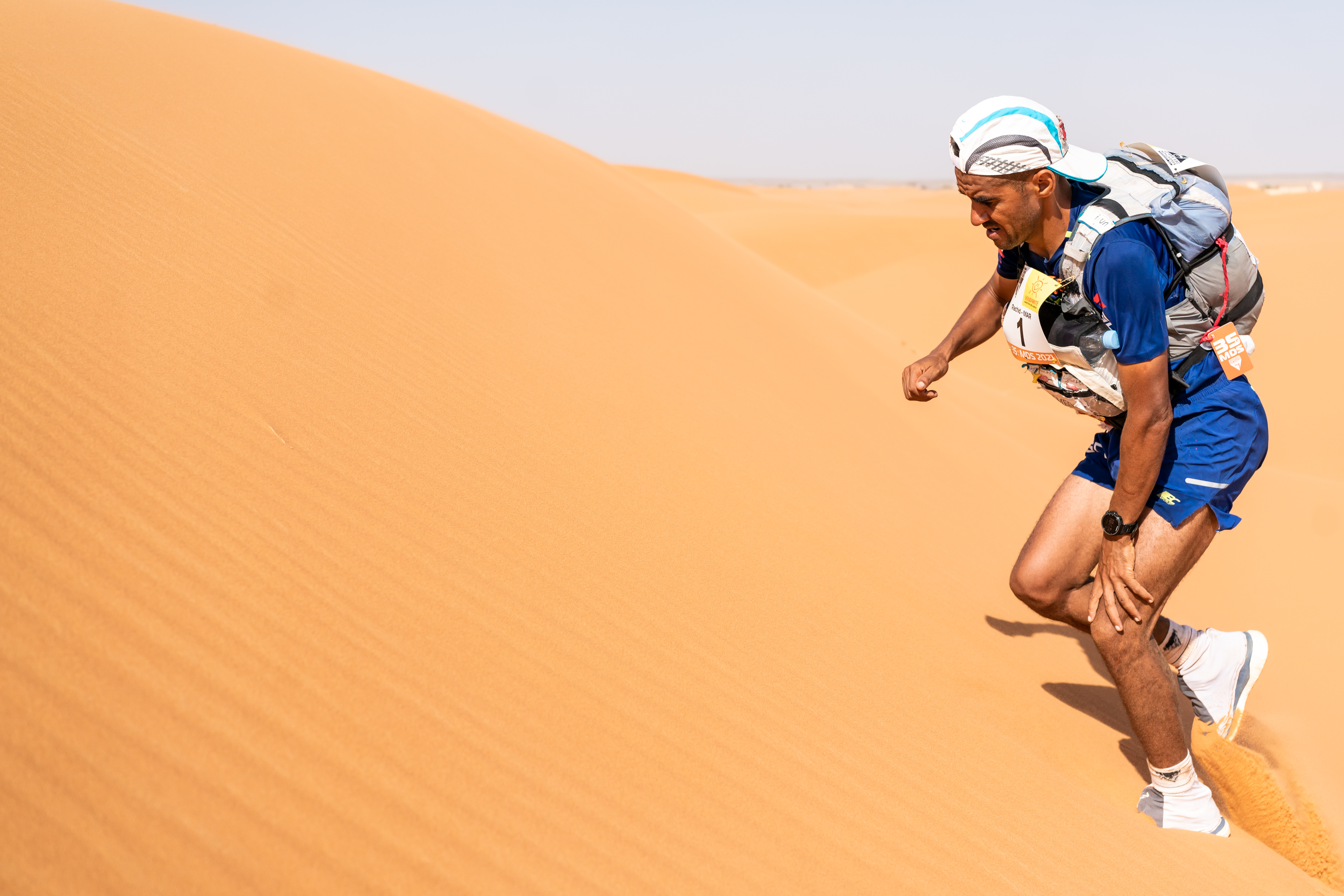
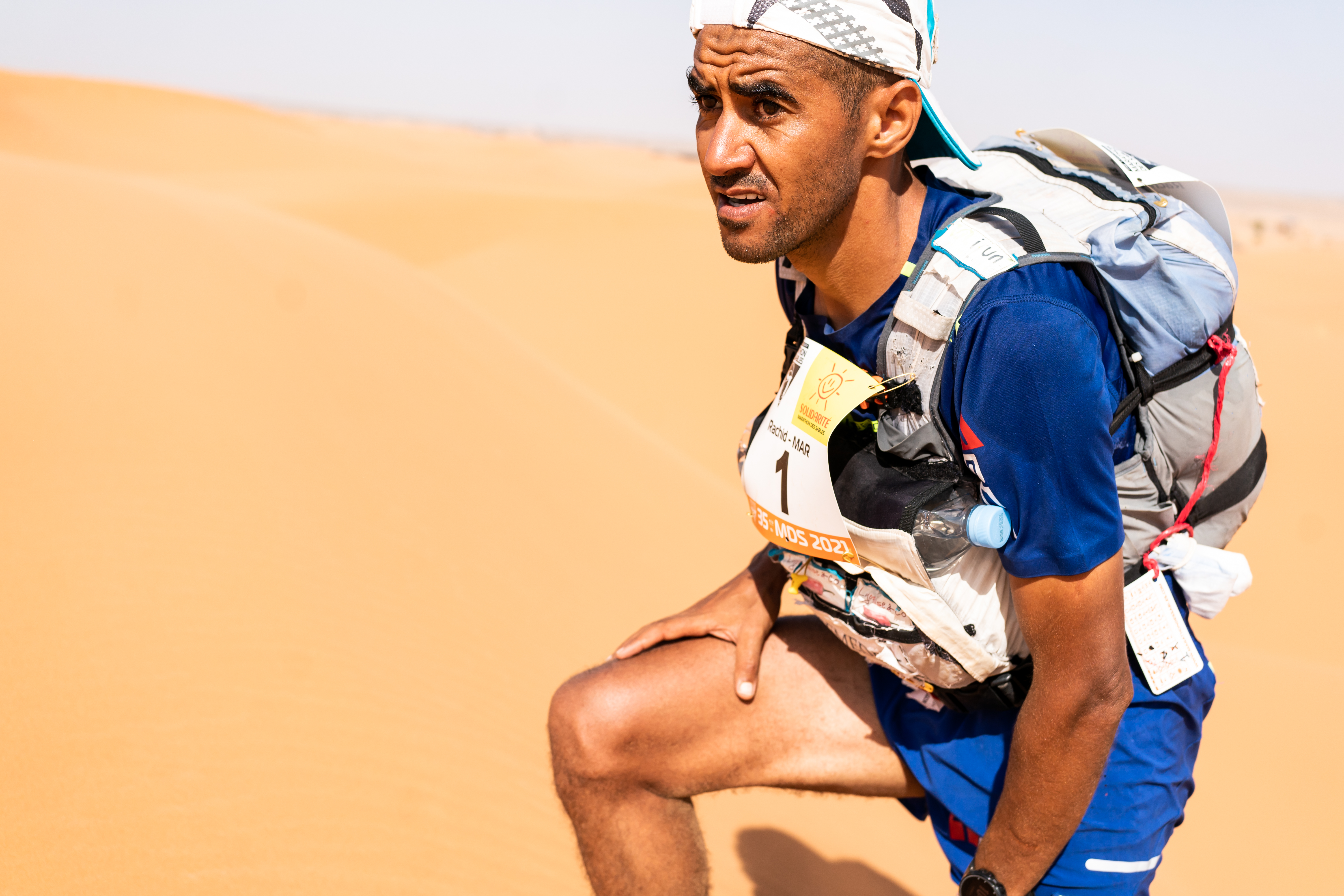
I can see CP2. Hallelujah! I’ve made it through Erg Chebbi. The extra bottle of water is a welcome gift. I can honestly say that I’ve never drunk so much water so rapidly. I take a few minutes under the shade of the checkpoint tents to recompose myself. The gaiters have done their job. A tiny bit of sand in one shoe probably snuck through the top of one while my leg was calf deep into the sand, running down one of the really tall dunes. On that note, I hadn’t mentioned the technique for descending the dunes. Probably enough to say just look at the pictures of people going down!
The last five or so kilometres to B2 (Bivouac Two) are stony plateaus. I run a few stretches, walking anything with soft sand underfoot. I feel strong and, in many ways, Dunes Day had been uneventful for me. Uneventful is good. We like uneventful. I can see the finish line and bivouac. I break into a run and make a point of going to the live cam as planned, hoping family and friends will see me looking strong and that they are reassured that I am okay.


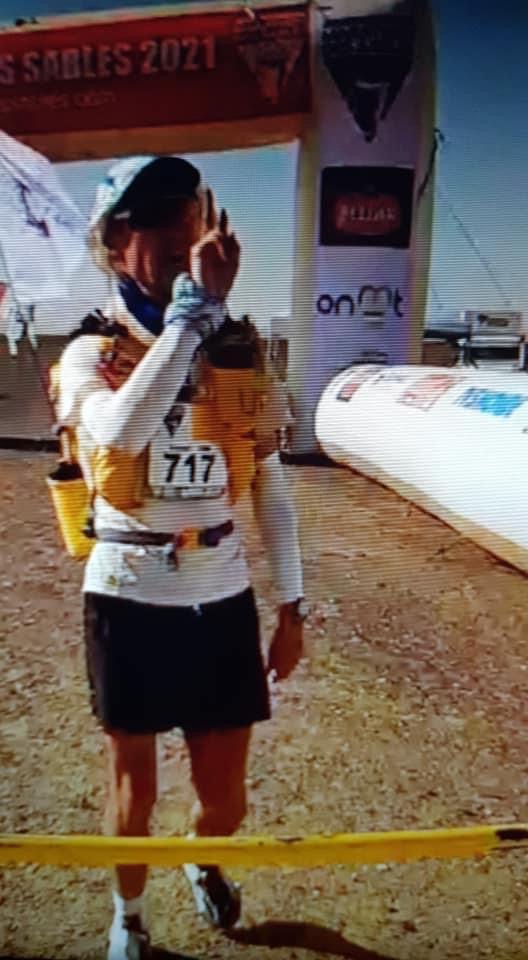
Yesterday I’d missed out on my tiny paper cup of sweet Moroccan tea. Not today. Damn it tastes good. I try and blag a second one but they are strict. I take out my water bag, collect four bottles and make my way back to Tent 59.
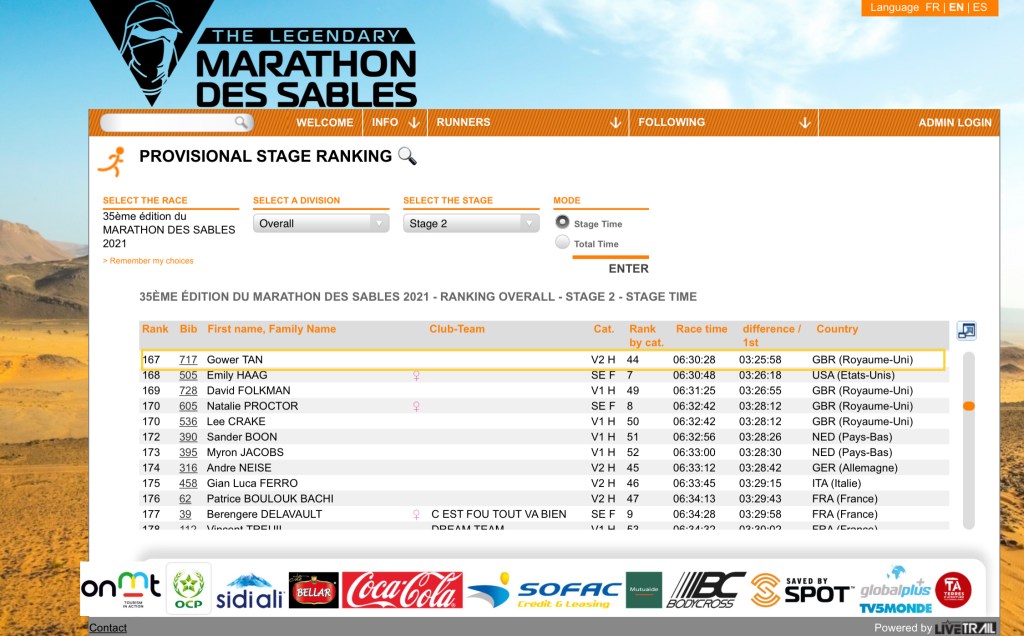
Simon was first back to the bivouac finishing an impressive 40th only two hours behind the leaders and 28th after the combined two stages. This is an incredible performance. Rob comes in 158th just under three and a half hours after the leaders. After yesterdays experience, Simon and Rob were offering good odds if you were betting against me finishing. They were beyond thrilled that I had bounced back and wiped the bookmakers clean. I make the top 200, finishing 167th just four minutes behind Rob, having burnt some time at CP1 before Erg Chebbi, trying too get calories inside me. I didn’t really care about my ranking but it had nevertheless been a good stage for me. I had climbed from 511th with my two hour time penalty to 334th after two stages. I’ll take that.
Others were not so fortunate as was rapidly becoming clear.
The heat inside our tent is stifling, shade protecting us from direct sun but not the heat. It is impossible to escape the heat. Our friendly bivouac postman passes by with a handful of messages. Smiles, laughter, tears.
Craig arrives about thirty minutes later and, while in his usual great spirits, he starts to deteriorate rapidly with severe D&V. He also shares alarming news that he had passed a fellow runner undergoing CPR at one of the checkpoints. As someone who himself had died while out running and been resuscitated, I can only imagine how this must have impacted him. Another half hour passes then Rich arrives, looking exhausted yet resilient and somehow incredibly strong. It would be another painful hour before the last of our remaining tent mates, Phil comes in. Eight hours and twenty minutes, drained by the relentless sand and slowly cooked by the blistering heat. Bravo Phil. Bravo.
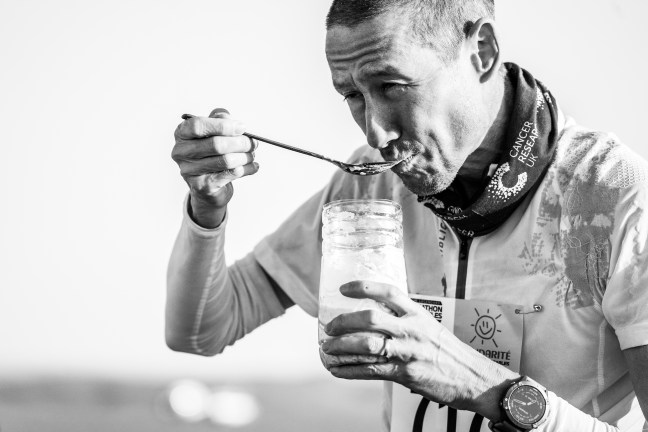
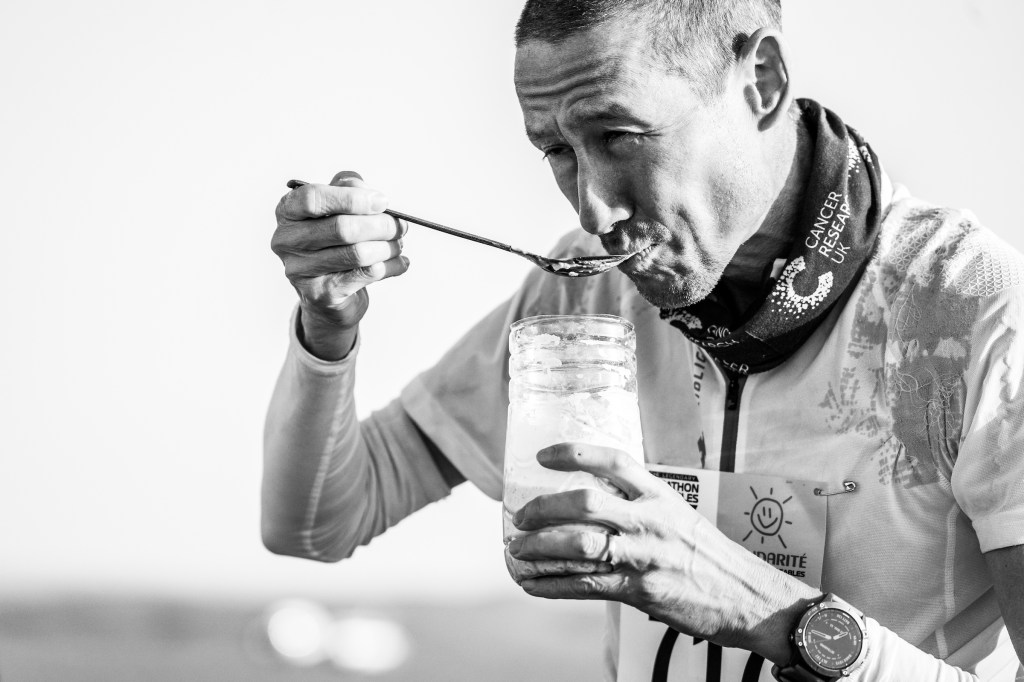
Our lovely bivouac marshal passes by our tent with instructions about water pickup, the extra water allowance and start time for the next day. Everyone is exhausted, but desperately trying to consume food. I try my trusty spaghetti Bolognese, leaving it in a cut up water bottle in the sun to rehydrate. I struggle to eat half of it. Even my beloved Twiglets don’t want to play. Must eat. Need calories. I try a chocolate protein shake and am relieved that it goes down.
Late in the afternoon, our bivouac marshal returns. Patrick has asked all runners and media to assemble in the middle of the bivouac at 7.00pm. Rumours start circling the camp like a sandstorm. The mood begins to darken.
Runners slowly assemble, head torches dimmed. The bivouac falls silent. It is the news everyone is fearing. We don’t need to wait for the translation. The eery silence, the tears in Patrick’s eyes. He is clearly struggling with the awful news he announces.
The MARATHON DES SABLES team deplores the death of a competitor in the 35th edition this afternoon following a cardiac arrest in the dunes of Merzouga.
This afternoon at 17:00 GMT, a French participant in the 35th MARATHON DES SABLES suffered a fainting spell in the Merzouga dunes. The man, who was in his early fifties and had fulfilled all the medical requirements for the race, had successfully completed the first stage without the need for medical assistance. After he collapsed, he was immediately rescued by two other competitors who are also doctors, who triggered the SOS button on his beacon and started the heart massage protocol. The event’s Medical Director arrived on the scene within minutes by helicopter and took over from the participants. After forty-five minutes of resuscitation, the medical team had to pronounce him dead. This is the third time that such an event has occurred on the MARATHON DES SABLES in 35 editions.
Out of respect for the family of this competitor, his anonymity will remain preserved. His loved ones have of course been informed immediately.
Patrick BAUER, Race Director, announced the news this evening to the participants in the heart of the bivouac. Staff and competitors are extremely affected. Patrick BAUER and all the family of the MARATHON DES SABLES express their sincere condolences to his close relatives. A psychological assistance unit will be set up to support those who express the need.
In order to respect all the people who have prepared for this adventure, the staff has decided to continue the race. A minute of silence will be observed before the start of the third stage. Continuing the adventure will also be a way to pay homage to this “brother of sands”. No interview will be given in the near future.
[From the official statement]
The race is mourning for a fellow runner. A fellow Sand Brother.
It is going to be a hot, restless night in the bivouac and tomorrow is a longer day. I cannot recall how many of my remaining tent mates vomit or have diarrhoea that night. Craig vomits again and heads to Doc Trotters. An hour or so later he returns and grabs his kit. He looks desperately unwell. We all hope the medics can work some magic.
I stumble from our tent trying not to wake my tent mates, although I don’t think anyone is sleeping. I gaze up at the stars. It is past two in the morning. There is no moon and the night sky looks extraordinary.
Sleep comes only in blocks of a few minutes at a time, interspersed with the constant sound of retching all around the bivouac. It is as if peoples entire inners are coming out.
RACE TIME: 06hr:30min:28sec
CUMULATIVE: 14hr:02min:55sec
Notes
1. Erg Chebbi: What we came to conquer!!! https://en.wikipedia.org/wiki/Erg_Chebbi
2. Mergouza: Tiny village in Morocco about 50k from the Algerian border, known for its proximity to Erg Chebbi https://en.wikipedia.org/wiki/Merzouga
3. Hamada: Type of barren, rocky desert landscape https://en.wikipedia.org/wiki/Hamada
 Running All Over Cancer