
My 6:00am train to Blackfriars is delayed. It is cold and my head is freezing. I didn’t think about a woolly hat! I miss my connecting train to Gatwick. The start line still feels a long way away. It’s fine….I’ve left tons of time and give myself a good talking to.
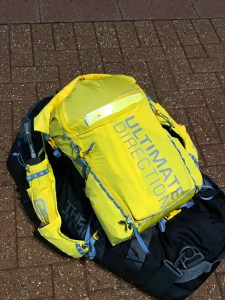
Arriving at Gatwick, I start to see a sea of tell-tale backpacks, water bottles with long straws attached, Sahara caps and finely tuned bodies poised to take on the Saharan sands! The atmosphere is a great mix of excitement at actually getting this far, good banter and apprehension. Everyone is looking at everyone else’s kit, shoes, packs, bottles…..
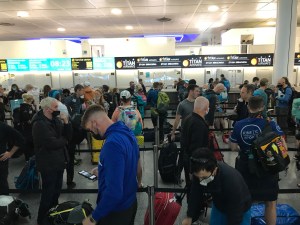
We meet the wonderful Sarah Chard, gospel and bedrock of RunUltra. Luggage tag attached, wristband on. I now feel like I actually belong among this bunch of crazies. After two and a half years I am almost at the start line, however the stress is not over quite yet.
Our flight is reassuringly uneventful, although I did later hear one lady only received her PCR test result email 5 mins before takeoff. It’s the first time I’ve flown in ages and having grown used to a regular commute across the pond in the comfort of Virgin Atlantic Upper, I find myself in the back row, middle seat 38B of a Titan Airways charter flight.
Our little A321 is packed full except….. the window seat next to me is empty. I have the last laugh. The flight is only three and a half hours long and I pass some of the time chatting with a runner from Boston, who got a relatively last minute place through the charity he works for (US version of Walking with the Wounded). My jaw drops when he tells me how heavy his pack is and we start a discussion about absolute necessities, nice to haves, luxury items and really crazy crap you really don’t want to carry across the desert.
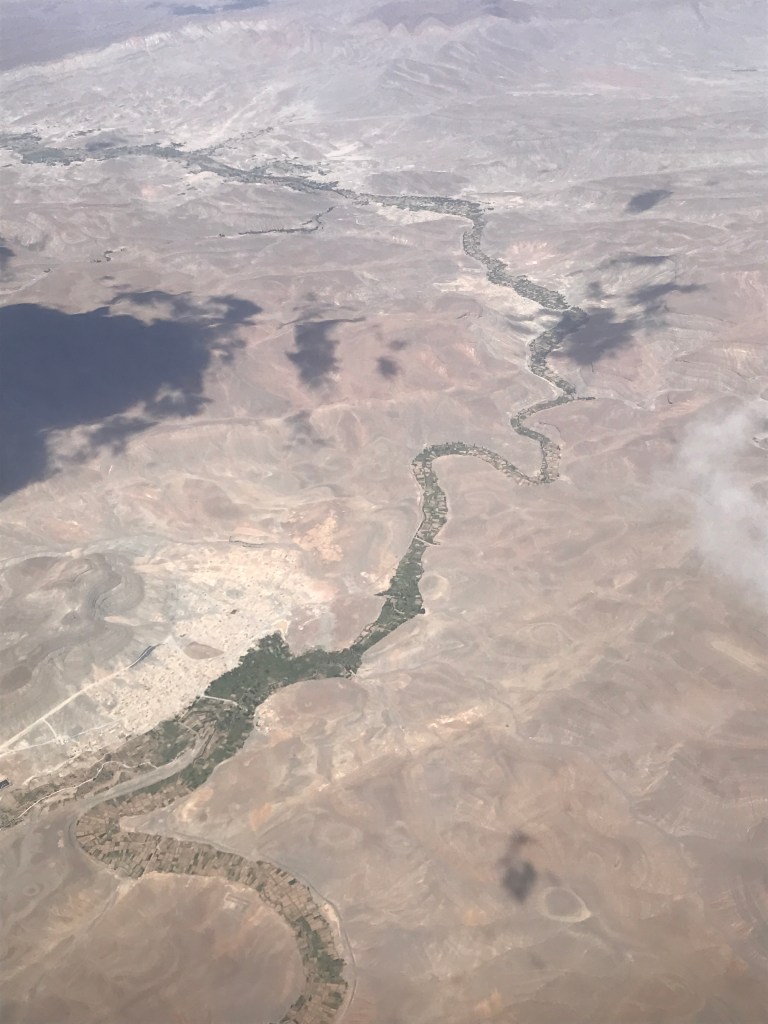
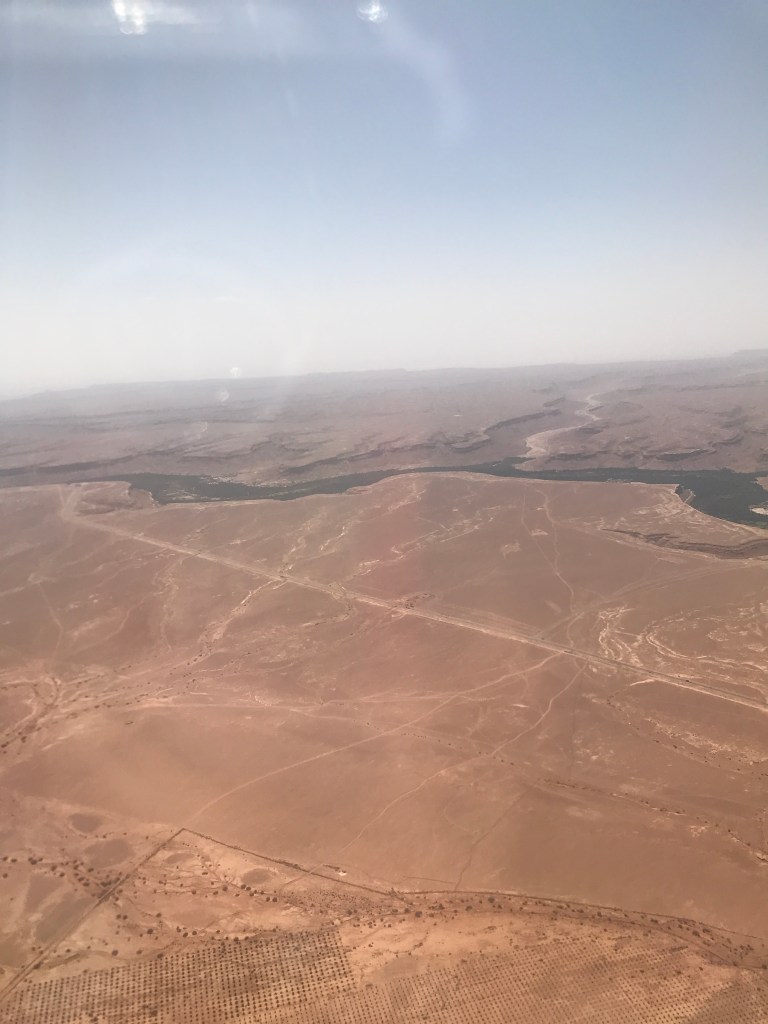
As we reach North Africa and the start of the Sahara1 I peer out the window and get a tiny sense of the enormity ahead. Every passenger on this flight is here for the MDS and I wonder who else is thinking the same as me.


The door opens and we step off the plane at the tiny airport in Errachidia, greeted by a thousand hairdryers at arms length from our faces on max setting. Almost without exception, everyone’s first sentence is the same:
F**k it’s hot!
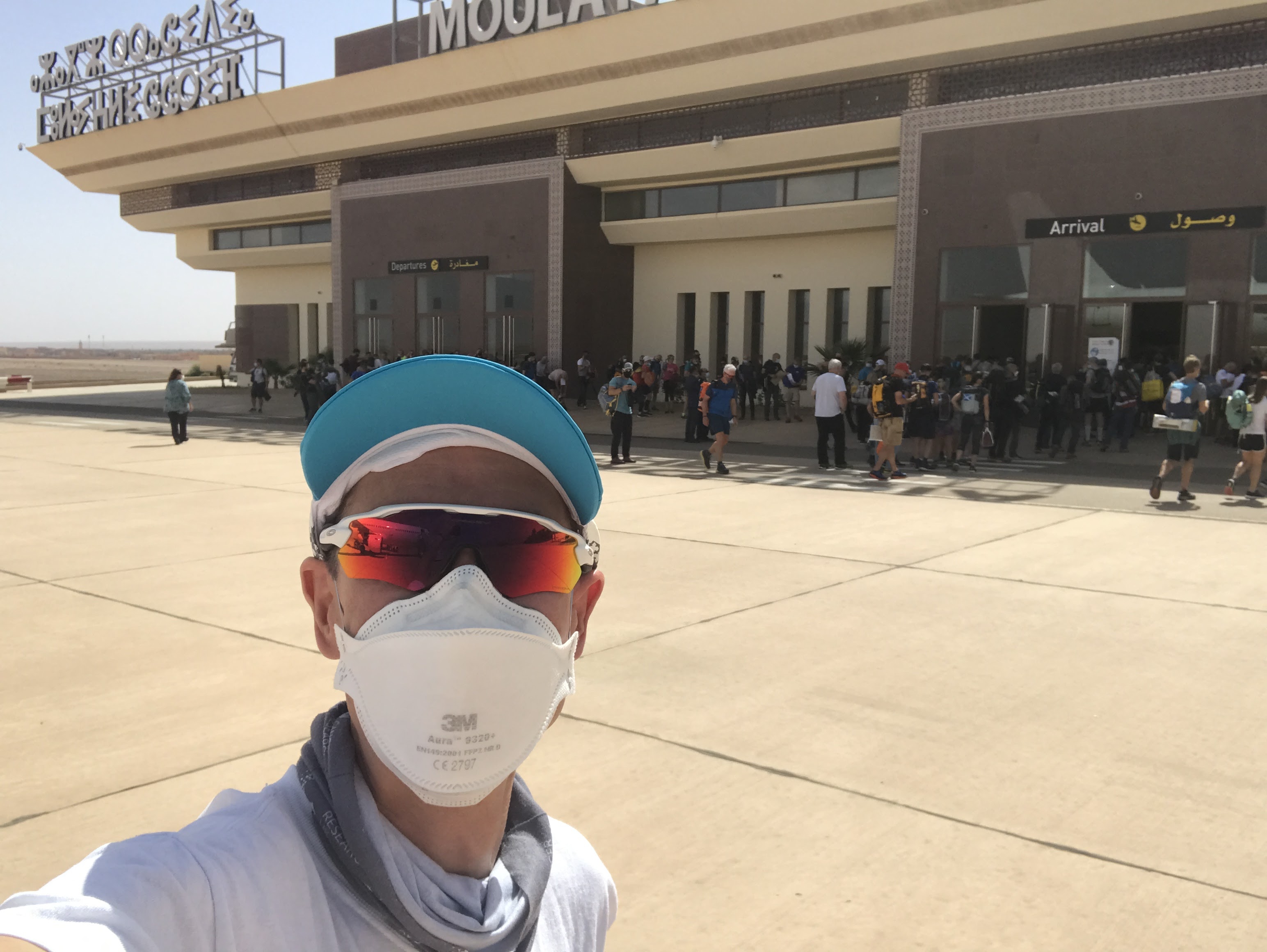
Prior to immigration, some officials in long white coats check various pieces of our COVID-19 paperwork (Moroccan Public Health Passenger Form and negative PCR test result). I mistakenly present my COVID-19 vaccination certificate which passes without question, however I appreciated that they made the effort. It seems inconceivable that the event would have taken place without extra protocols in place.
After a short wait to get through immigration we are greeted by Steve Diederich, founder and MD of RunUltra. Steve is a true gent and all round good egg and has a way of immediately making you feel welcome and at ease. He is tolerant, patient and kind and has years of experience having looked after the MDS for about fifteen years and worked on every event for the past thirteen editions. Steve works as a course marshal whilst on the race, helping runners to achieve their ambition of getting their medal and together with Sarah, he looks after the UK and Irish registrations.


Steve invites us to grab some biscuits and Moroccan tea (small glasses of black, exceptionally sweet tea) that we would come to absolutely crave and love at the end of each stage. A final check of COVID-19 vaccination certificates by the MDS medical team and onto a coach – our last burst of air conditioning for the week and final journey that would not made by foot.
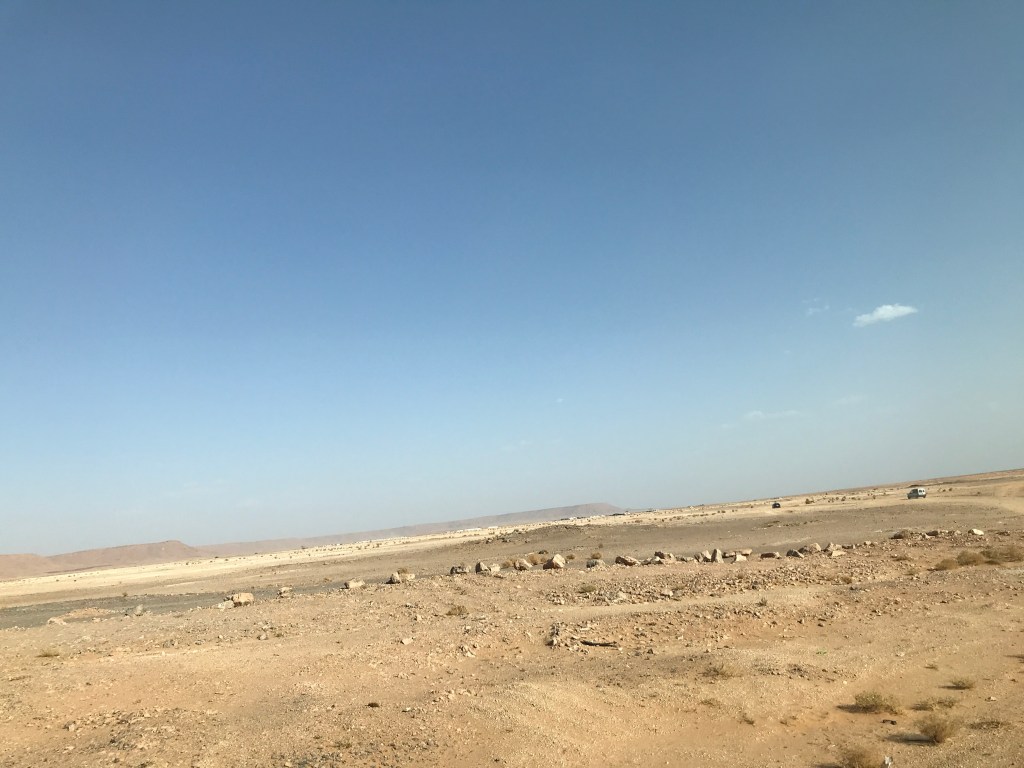
On the short ride to the bivouac, I peer behind the curtains shielding the blinding heat. Even with the briefest of glimpses, the inhospitable nature of the Sahara was becoming apparent. We are handed the infamous ‘Roadbook’ by one of the lovely French administration team – our bible containing every critical detail about the event from how to use the shit bags to emergency beacon instructions to the plethora of rules and most importantly, the route map for each stage, with terrain and compass bearings.


Here comes our first surprise. Patrick Bauer, legendary founder and Race Director, clearly wanted to make the 35e Edition of the MDS, already postponed from April because of COVID-19, extra special. The route for the dreaded ‘Long Stage’ was missing….. and would only be revealed after the end of Stage Three. The nervous laughter was palpable.
My coach is the last to arrive at ‘the bivouac’. I’m directed by Bivouac Marshals towards my my tent and handed a welcome gift – two brown, biodegradable bags (more about those later). Our home for the next eight nights was a couple of long pieces of wood covered with a large black blanket. As we moved from one stage to the next, so our new home would be expertly (sometimes) dismantled and re-erected by the Berbers2. For some reason it seemed that our first bivouac (B0) had been set up by a trainee Berber. Compared to others, it appeared to be lacking in size and poorly erected!! All good banter for eight blokes wedged in like the food in our packs.

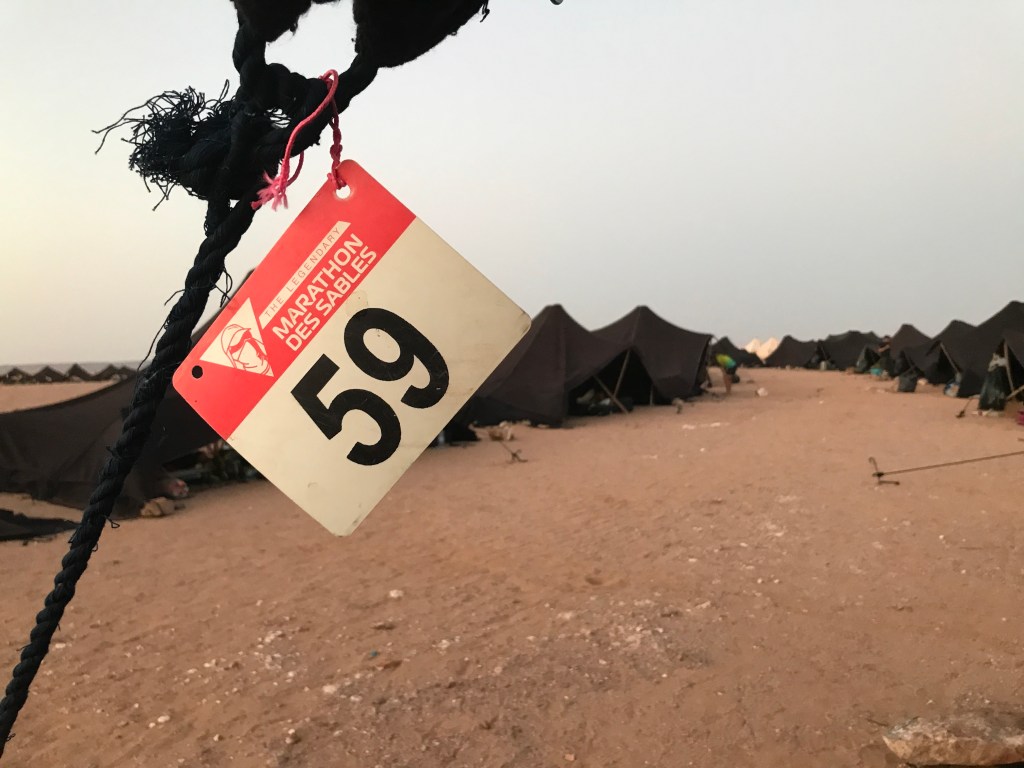


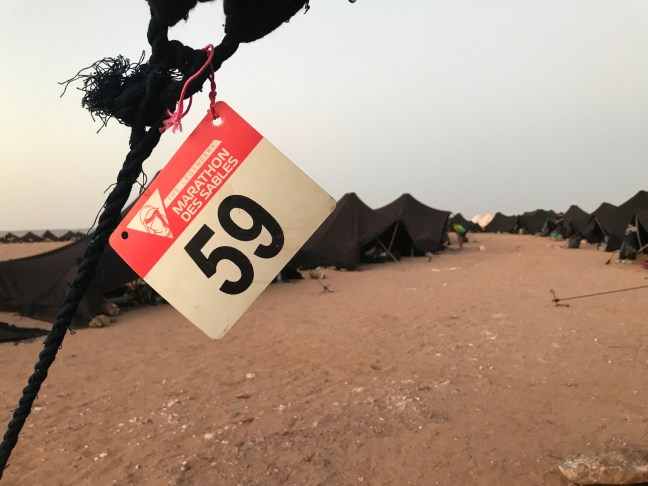
Other than Rob who had upgraded to a scheduled flight from LHR and arrived in the early hours of the following day, I was last to arrive at Tent 59. Quick introduction to fellow tent mates – Phil, Aaron, Craig, Kev, space for myself and Rob, Rich and Simon. And so the bonding and the banter begins.
It is unsurprising how rapidly any and all dignity disappears – as an example, the distance from the tent to where you pee, vomit or anything else declines exponentially. By the last day we have friendships which will last a lifetime and trust in one another deeper than the highest dunes. More than anything, this event is about camaraderie or to use Patrick’s words:
‘Solidarity, sharing and benevolence will be the order of the day, together with respect for differences. For here differences do not separate, they unite: do not hesitate to go towards the Other, the one you do not know, who in a week will become a true Sand Brother.’
Alas little did we know that our band of eight Sand Brothers would be decimated piece by piece, culled by the wrath of the Sahara.

I’d read something in the plethora of pre-race emails that the bivouac worked on a different time zone. WTF? Morocco is in the same time zone as the UK. Oh wait, maybe being a French event perhaps it will be on French time. No. Neither. Another Patrick idiosyncrasy perhaps, the bivouac operates on its own time zone: MDS time. This is actually Greenwich Mean Time (GMT), so effectively we are minus one hour to the ‘real time’ in Morocco, minus one hour to British Summer Time (BST) and minus two hours to French time. I still have no idea why. No one does.
After settling in to our new found luxury, our friendly Berber Marshal made the first of her many daily visits to our tent, advising of a briefing at 5:00pm. While she spoke virtually no English, our communications were clear – my French vocabulary returning rapidly and many hand gestures to assist. We were being summoned for the first of many long, very long briefings from M. Bauer……. first in French and then duly translated into English by his trusty sidekick.
So who is this Patrick Bauer? When it comes to the Marathon des Sables – he invented it, created it, owns it, is the custodian and general God as far as I can see. Like Patrick, the Marathon des Sables is apologetically French. Actually, I love that it is.

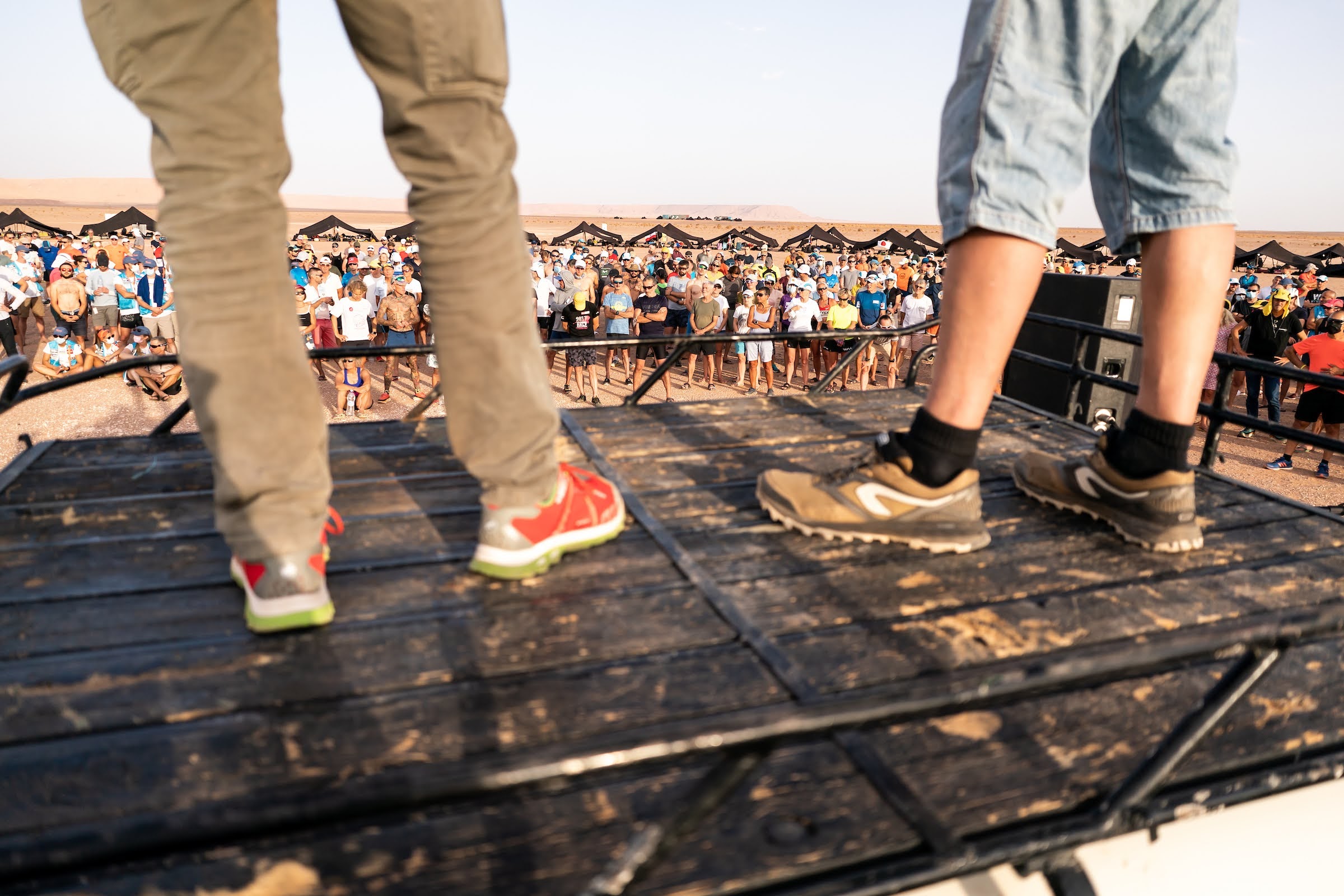


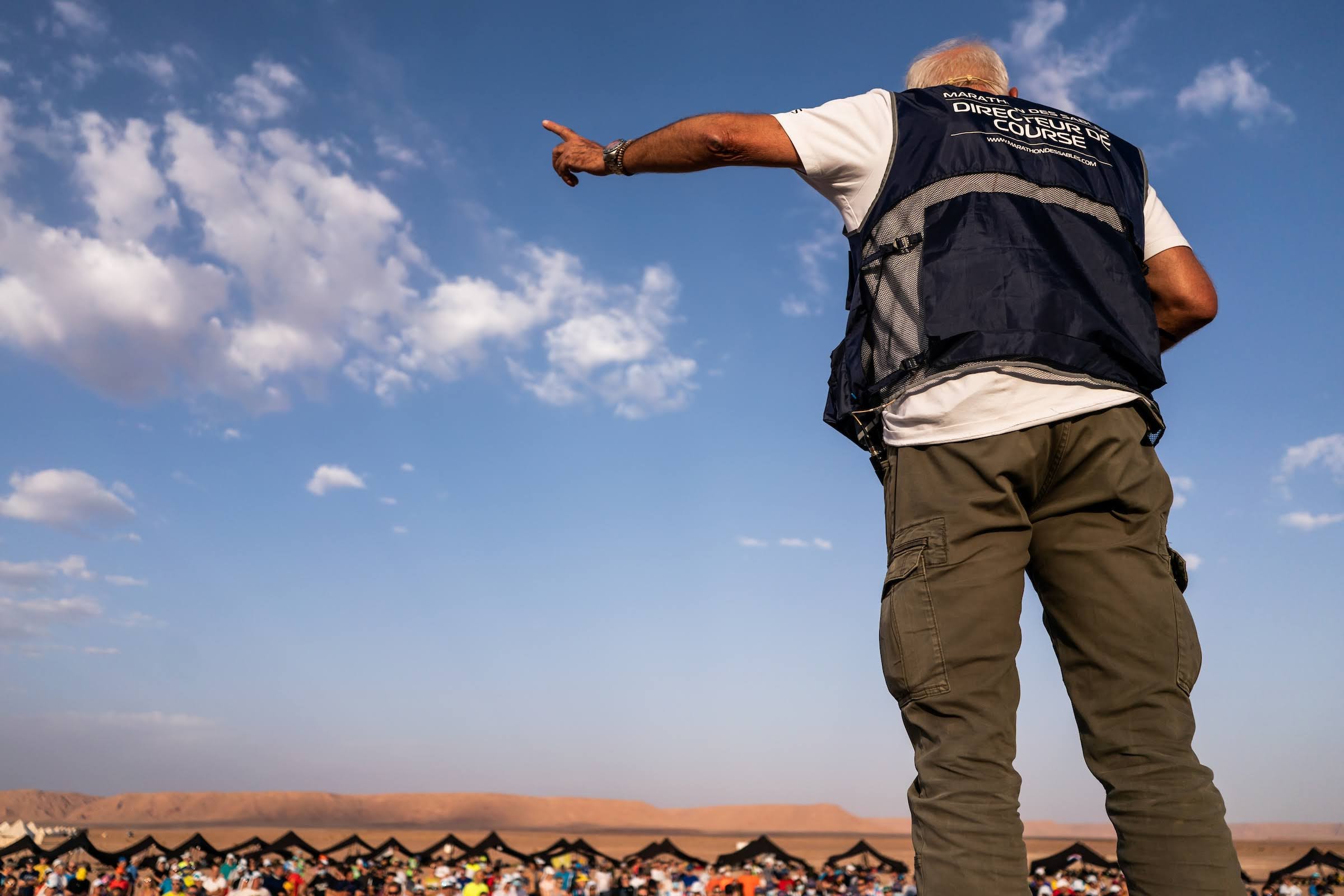
The long welcome and briefing is presented from the traditional location (roof of a Land Rover) and includes a detailed demonstration of how to use the aforementioned brown sacks. Remember to put a small stone in first!

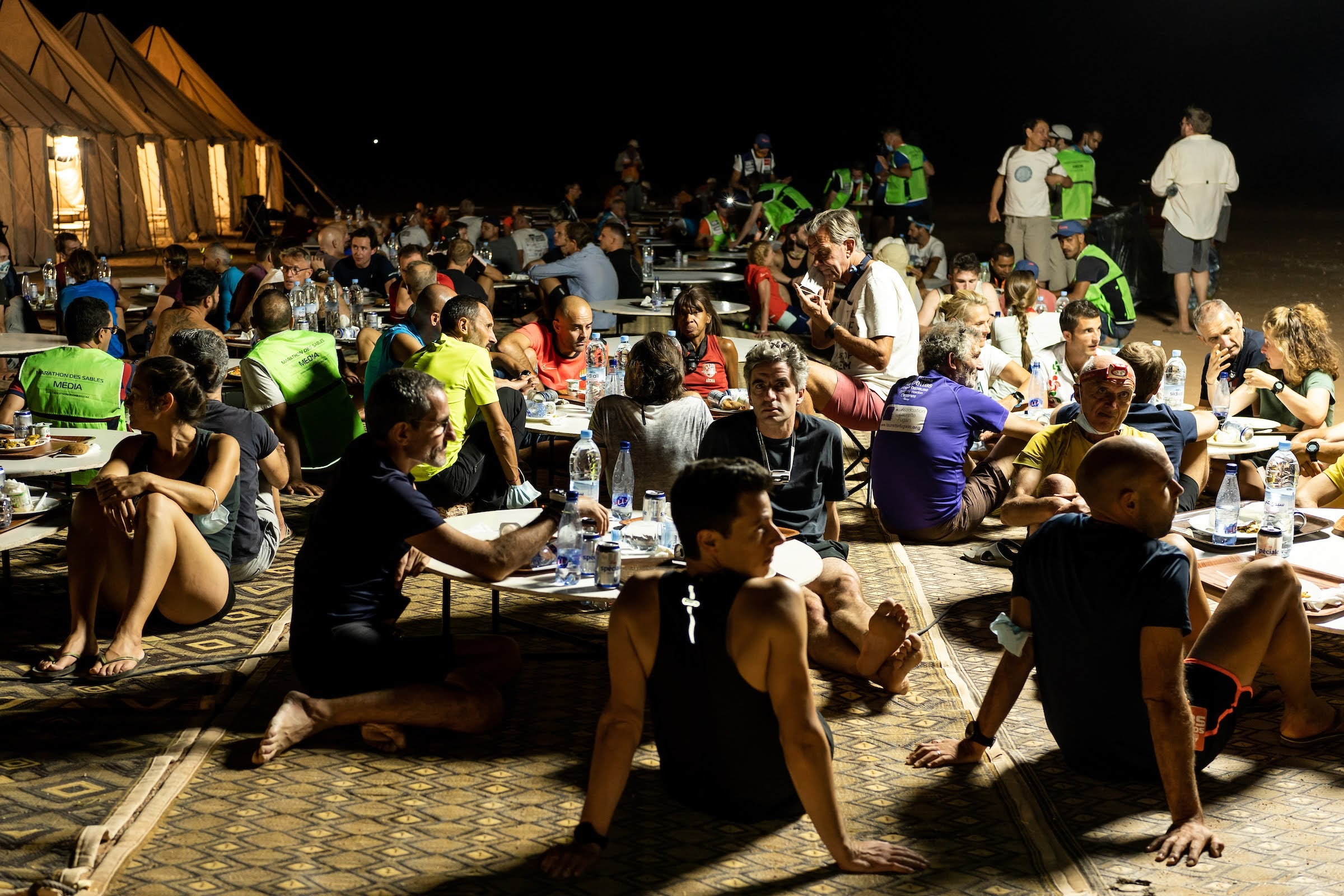
We head back to our tent and then on to our penultimate ‘real’ dinner before our first night on the bivouac.

Notes
1. The Sahara (‘the Greatest Desert’) is a desert on the African continent. With an area of 9,200,000 square kilometres (3,600,000 sq mi), it is the largest hot desert in the world and the third largest desert overall, smaller only than the deserts of Antarctica and the northern Arctic. The desert comprises much of North Africa, excluding the fertile region on the Mediterranean Sea coast, the Atlas Mountains of the Maghreb, and the Nile Valley in Egypt and Sudan. It stretches from the Red Sea in the east and the Mediterranean in the north to the Atlantic Ocean in the west, where the landscape gradually changes from desert to coastal plains. To the south, it is bounded by the Sahel, a belt of semi-arid tropical savanna around the Niger River valley and the Sudan Region of Sub-Saharan Africa. The Sahara can be divided into several regions, including the western Sahara, the central Ahaggar Mountains, the Tibesti Mountains, the Aïr Mountains, the Ténéré desert, and the Libyan Desert. For several hundred thousand years, the Sahara has alternated between desert and savanna grassland in a 20,000 year cycle caused by the precession of Earth’s axis as it rotates around the Sun, which changes the location of the North African Monsoon.
2. Berbers or Imazighen are an ethnic group who are indigenous to North Africa, specifically Morocco, Algeria, Tunisia, Libya, the Canary Islands, and to a lesser extent in Mauritania, northern Mali, and northern Niger. Smaller Berber populations are also found in Burkina Faso and Egypt’s Siwa Oasis.
 Running All Over Cancer